
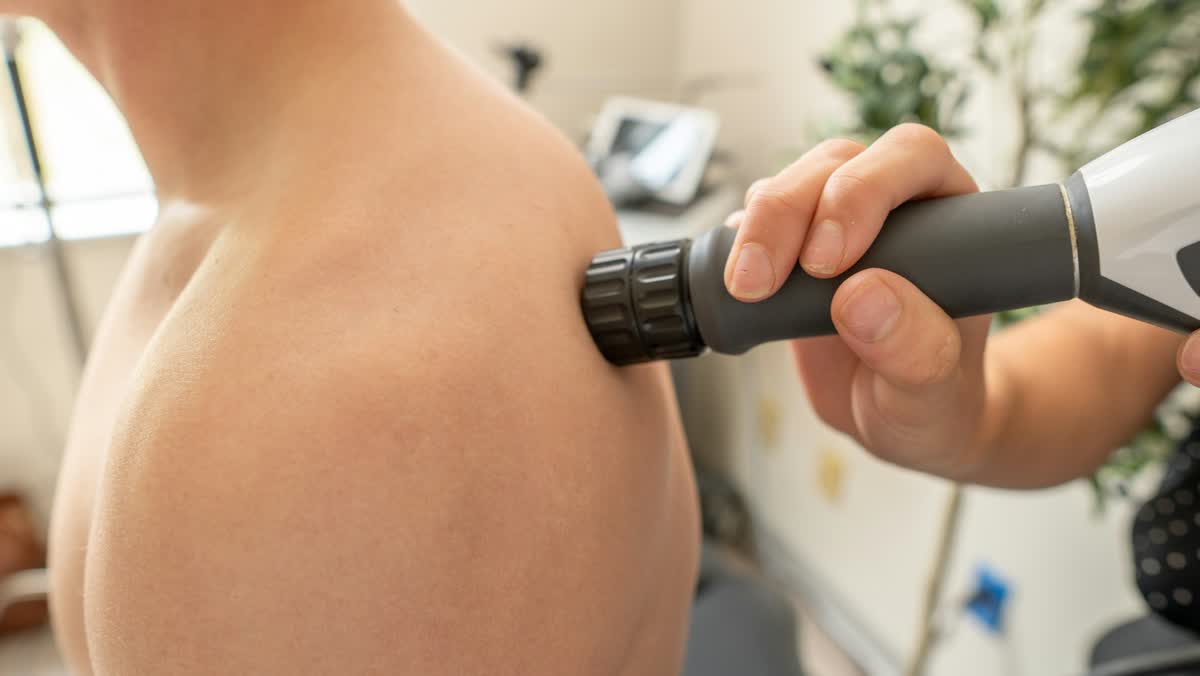
A small wand, a dab of gel, a few minutes in one spot. That's roughly how therapeutic ultrasound looks from the outside, which is why people ask whether it's doing anything at all. Fair question. Here's what it is, what you'll probably notice, and where it fits in chiropractic care.
Same name as the baby scan, different job
Imaging ultrasound uses sound to make a picture. Therapeutic ultrasound uses sound waves at settings meant to be absorbed by the tissue, where they may produce gentle warmth below the skin surface, deeper than a heat pack typically reaches. There's no picture involved and nothing is being looked at. It's a treatment, and a modest one. Our therapeutic ultrasound and e-stim page gives the overview.
What you'll notice
Gel goes on the skin. A small applicator is moved in slow circles over the sore area, usually for a few minutes. Many people feel a mild warmth. Some feel nothing at all, and that is a normal answer, not a sign it's failing. It shouldn't feel hot, sharp, or like it's digging. If it does, say so and the setting changes.
Why use it
The thinking is that warmth may boost blood flow to a tight or irritated area and let a guarded muscle relax a little, which can make the next part easier. That next part is the one doing the heavier lifting: spinal adjustments, movement, exercises. Ultrasound is closer to a warm-up than a main event. How much it helps varies from person to person, and we'd be making things up if we told you more precisely than that.
Why not just use a heating pad?
Reasonable thing to ask. A heat pack at home warms the surface and costs next to nothing. The pitch for ultrasound is warmth that may reach deeper, aimed at one spot, by someone who has just examined you and knows what that spot is. If that isn't worth it to you, short stretches of home heat are a sensible thing to try anyway. Keep a cloth between the pack and your skin, and check the skin afterward.
Where it tends to come up
Stiff, guarded muscle is the usual target: the band along the side of the neck, the upper back between the shoulder blades, the low back after a long day. If one of those sounds like yours, the exam decides whether ultrasound has a place in your plan. For many people with tight muscle, it's a short step before everything else, not a reason to come in by itself.
After the visit
A little warmth or mild tenderness that fades within a few hours is common enough. Anything that gets worse, or a patch of skin that looks red or feels sore, is worth a call. Muscles also tend to feel best right after treatment and then drift back toward their habits, which is what the movement and strengthening are for.
Tell us first
Ultrasound isn't appropriate everywhere on everybody. Mention it before treatment if you're pregnant, have an implanted device or metal near the area, skin that's numb in the spot, a known tumor, circulation problems, or swelling or infection there. Any of those can be a reason to skip it or change how it's used.
And if a muscle ache comes with fever, unexplained weight loss, or pain that wakes you at night and doesn't ease with position, that's a call for a medical evaluation, not another round of warmth.
A frequent partner
Ultrasound often gets paired with electrical muscle stimulation, which works differently. We wrote up electrical muscle stimulation (e-stim) and how it eases pain separately. If your tight neck or back showed up after a crash, muscle spasms after a car accident covers that angle, and our auto injury page explains care after a collision.
The strengthening part
Muscles that tighten again and again are usually protecting something, or they're underpowered for what you ask of them. Warmth won't fix either. That's where rehab and corrective exercise comes in, and why rehab exercises make relief last goes deeper.
If you're in Milwaukie or Oak Grove and a tight spot just won't let go, when to see a chiropractor versus waiting it out is a reasonable place to start, or you can contact the office directly.
Educational information only, not a diagnosis. Whether ultrasound suits you depends on your exam.
Tight muscles that won't let go?
Let's find out what's behind it. We'll examine first and explain your options.