
What these therapies are
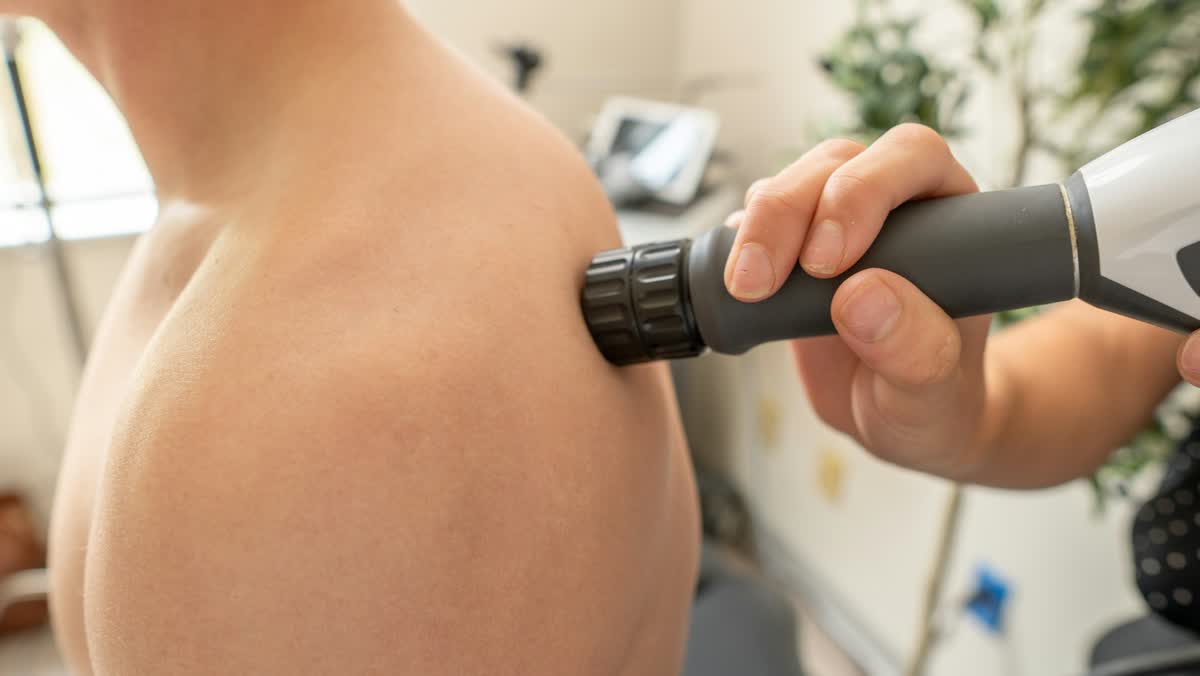
Therapeutic ultrasound uses sound waves delivered through a small handheld wand, moved slowly over the skin with a layer of gel. The sound waves reach below the surface into muscles, tendons, and other soft tissue, where they aim to boost circulation and support healing. It’s different from diagnostic ultrasound — we’re treating tissue, not taking pictures of it.
Electrical muscle stimulation (e-stim) sends a mild electrical current through small pads placed on the skin. It’s used to reduce pain, relax muscles that are in spasm, and support recovery after an injury.
What they’re commonly used for
- Strained muscles and tendons
- Muscle spasm and guarding in the neck or back
- Soft-tissue injuries, including those from a car accident or work injury
- Supporting recovery alongside adjustments and exercise
What a visit feels like
With ultrasound, most people feel little more than the cool gel and, sometimes, a mild warmth. With e-stim, you’ll feel a tingling or gentle pulsing under the pads. We set the intensity to your comfort and adjust it whenever you ask. Both are quiet, low-key parts of a visit — many patients simply relax while they run.
Who they may not be right for
We’ll ask about your health history first, because these therapies aren’t suitable for everyone or every area of the body. E-stim is generally avoided if you have a pacemaker or other implanted electrical device, and neither therapy is used over areas such as a pregnant abdomen, broken skin, an active infection, or a known tumor. Reduced sensation in an area can also be a reason to choose something else. If either isn’t right for you, there are other options.
How they fit with other therapies
Ultrasound and e-stim are rarely the whole plan. They often prepare tight tissue for, or follow up after:
Injured in a crash? Soft-tissue strain and muscle spasm are common after a collision. Our auto injury care page explains how Oregon PIP generally covers treatment regardless of fault — and we bill it directly. Your policy governs, so check with your agent or insurer. This isn’t legal advice.